Tender Armor
Tender Armor examines how protection takes shape through emotional, bodily, and material processes rather than force or rigidity. Bringing together artists who work with landscape, hybridity, and organic form, the exhibition traces a progression from interior psychic containment, to bodies shaped through entanglement with the nonhuman, to structures that shelter without hardening. Across painting, sculpture, photography, and material-based practices, Tender Armor considers how care, adaptation, and form operate as modes of defense.
Section I: Nature as Psyche
This section brings together works that approach nature as a site of interior depth rather than representation. Landscapes and organic processes appear as spaces shaped by memory, perception, and shared visual experience, where emotion is held through atmosphere, texture, and material transformation. Rather than offering narrative resolution or symbolic clarity, these works create environments that invite slow looking and inward attention, suggesting that psychological states can be carried, buffered, and sustained by natural forms and visual familiarity.
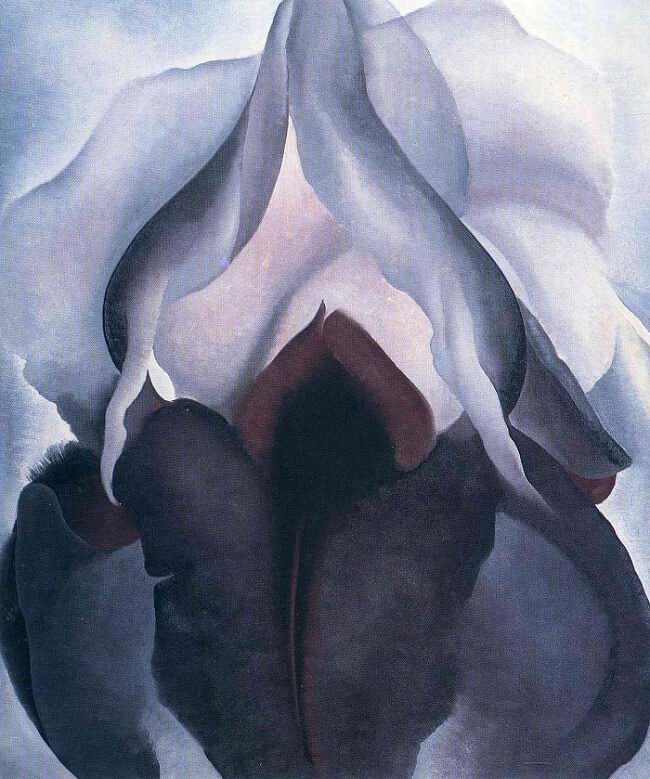
O’Keeffe’s close-focus rendering of the iris transforms botanical form into a site of intense inward attention. The flower functions less as an object of observation than as an immersive field of sensation, where scale, contour, and color hold emotional charge without narrative or symbolism.
Georgia O’Keefe, Black Iris (1926)
Oil on canvas
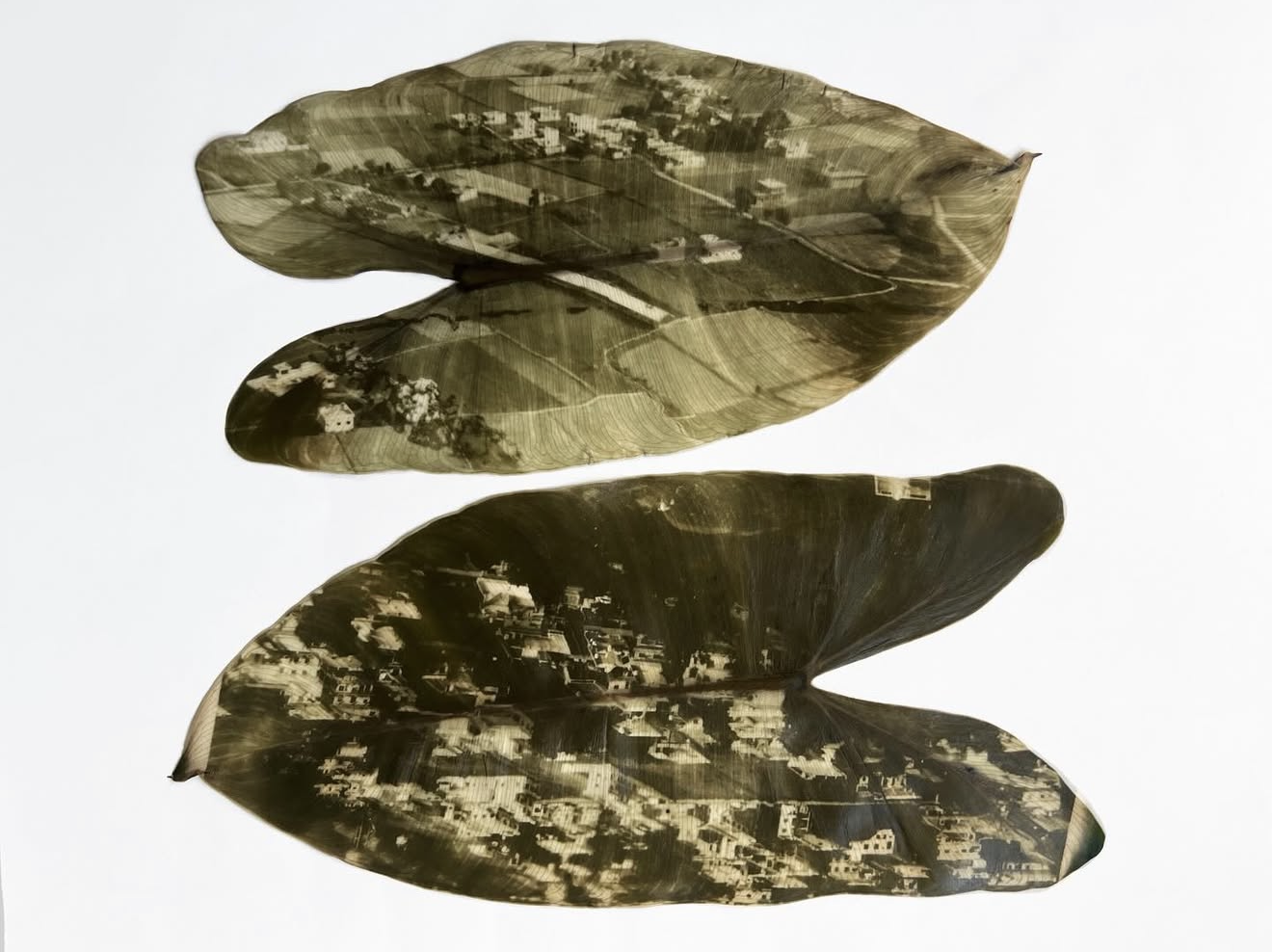
Riya Panwar, Perspective (2024)
Chlorophyl print on leaf
Using chlorophyll printing on organic surfaces, Panwar allows light, time, and vegetal matter to shape the image itself. Nature operates here as both medium and condition, producing an image that feels suspended and fragile, an imprint of perception rather than a depiction of place.
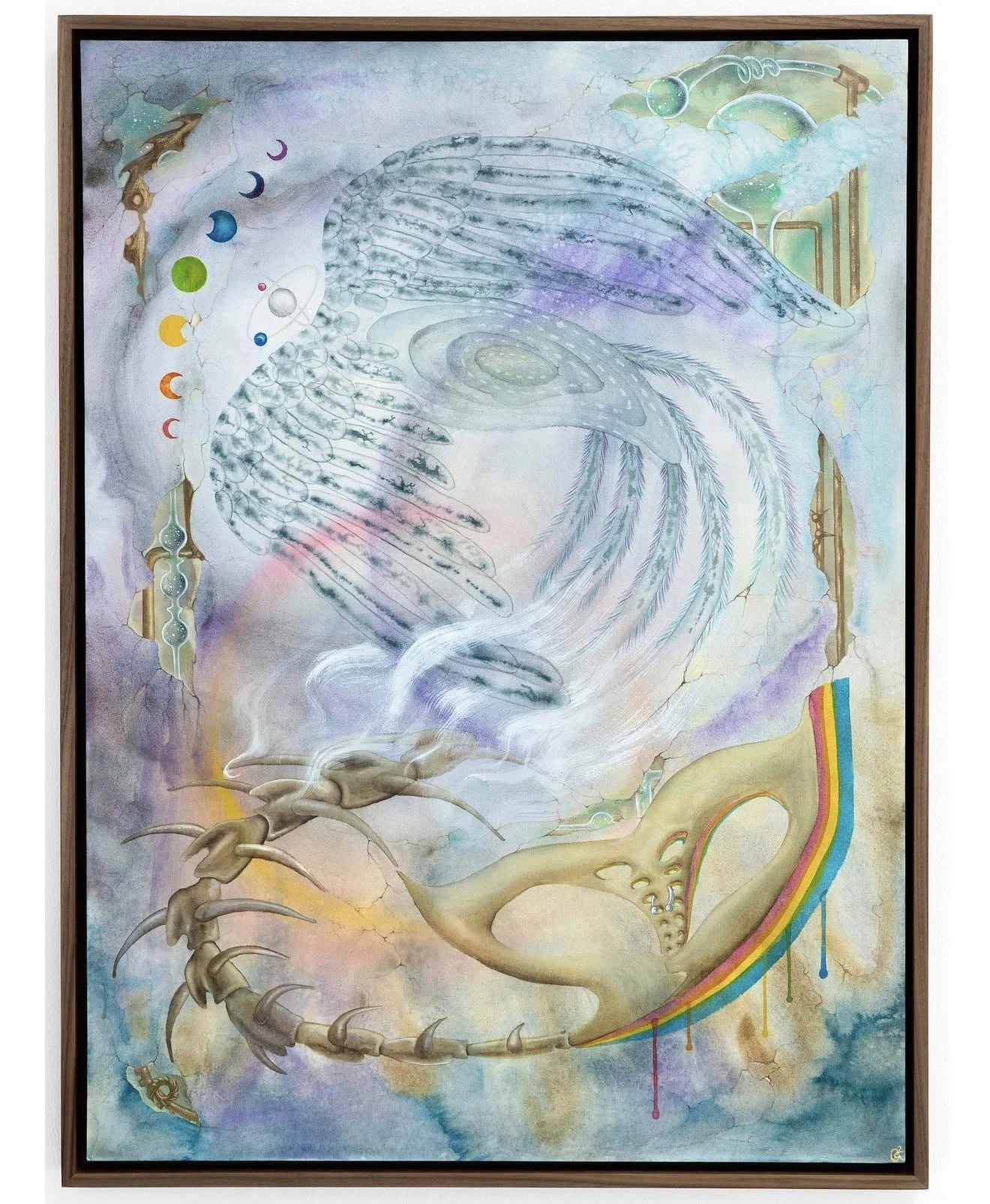
Qian Qian, The Oracle 2024
Watercolor and mixed media on archival board
In The Oracle, Qian Qian presents a dreamlike natural environment that reads as a psychological interior rather than a literal landscape. The work situates intuition and inward knowing within an organic setting, where atmosphere and ambiguity create space for contemplation rather than interpretation.
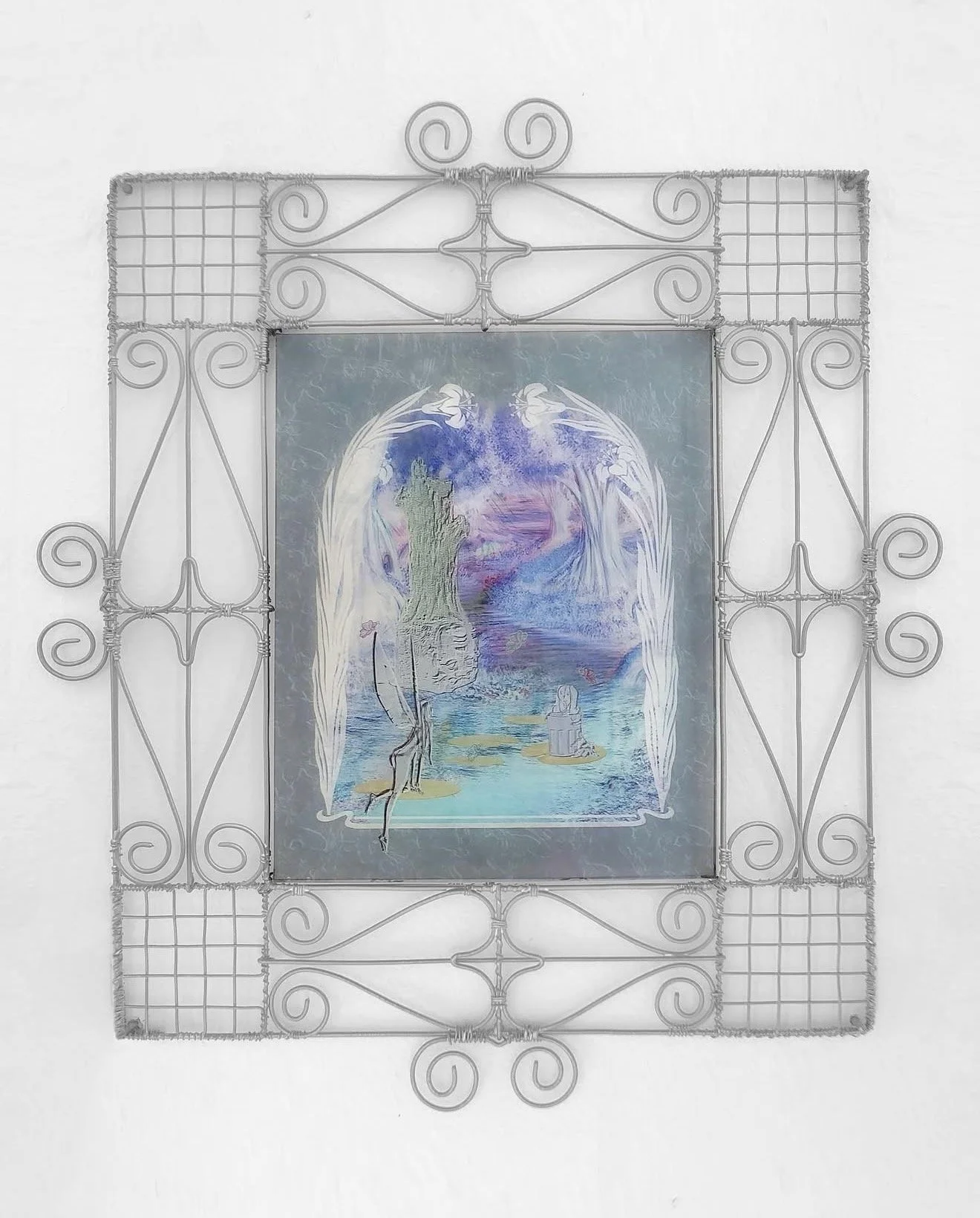
Gitte Maria Möller, Crying Column (2022)
Crying Column constructs a natural environment that feels layered, familiar, and just out of reach. Through softened focus, overlapping textures, and a mediated visual language, the work creates a sense of depth that is both spatial and psychological. Rather than presenting a fixed narrative, the image functions as a site of quiet recognition, drawing on shared visual cues and atmosphere to hold feeling within the landscape.
Digital print on Perspex, galvanised steel
Section II: Hybrid Selves
This section examines how identity takes shape through contact with the nonhuman. Rather than treating the self as stable or autonomous, the works here approach embodiment as relational, formed through proximity to light, landscape, animal presence, and organic matter. Bodies appear in states of emergence, dissolution, or quiet alignment with their surroundings, suggesting that adaptation and permeability function as strategies of survival before protection becomes structural.
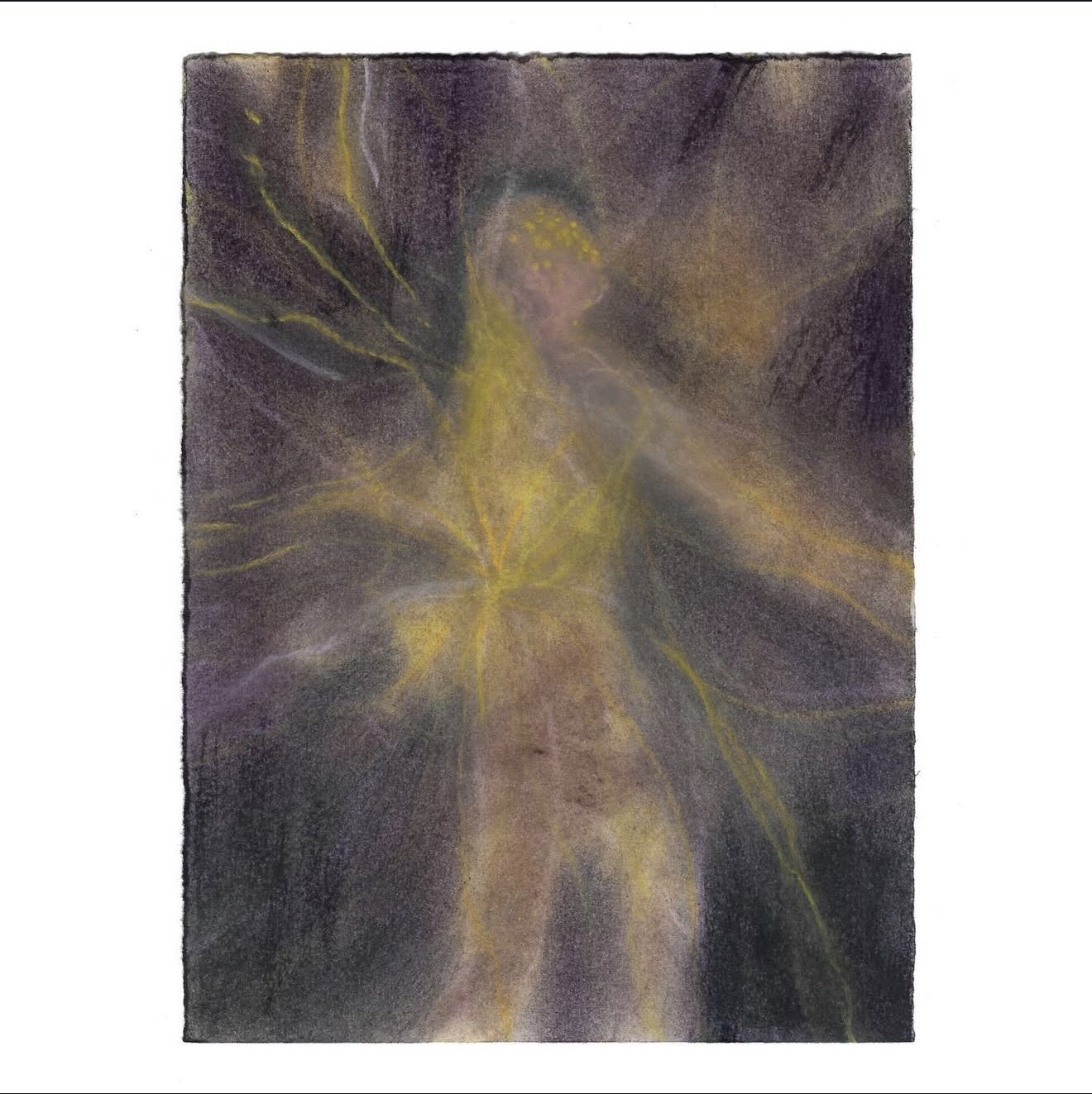
Mary Ann Herbert, You Loved The Light (2023)
Soft pastel on paper
This work presents the body as responsive to its environment, shaped by exposure rather than enclosure. Light operates as an active force, influencing posture, presence, and emotional orientation. The figure appears neither separate from nor absorbed by its surroundings, but formed through sustained contact with them.
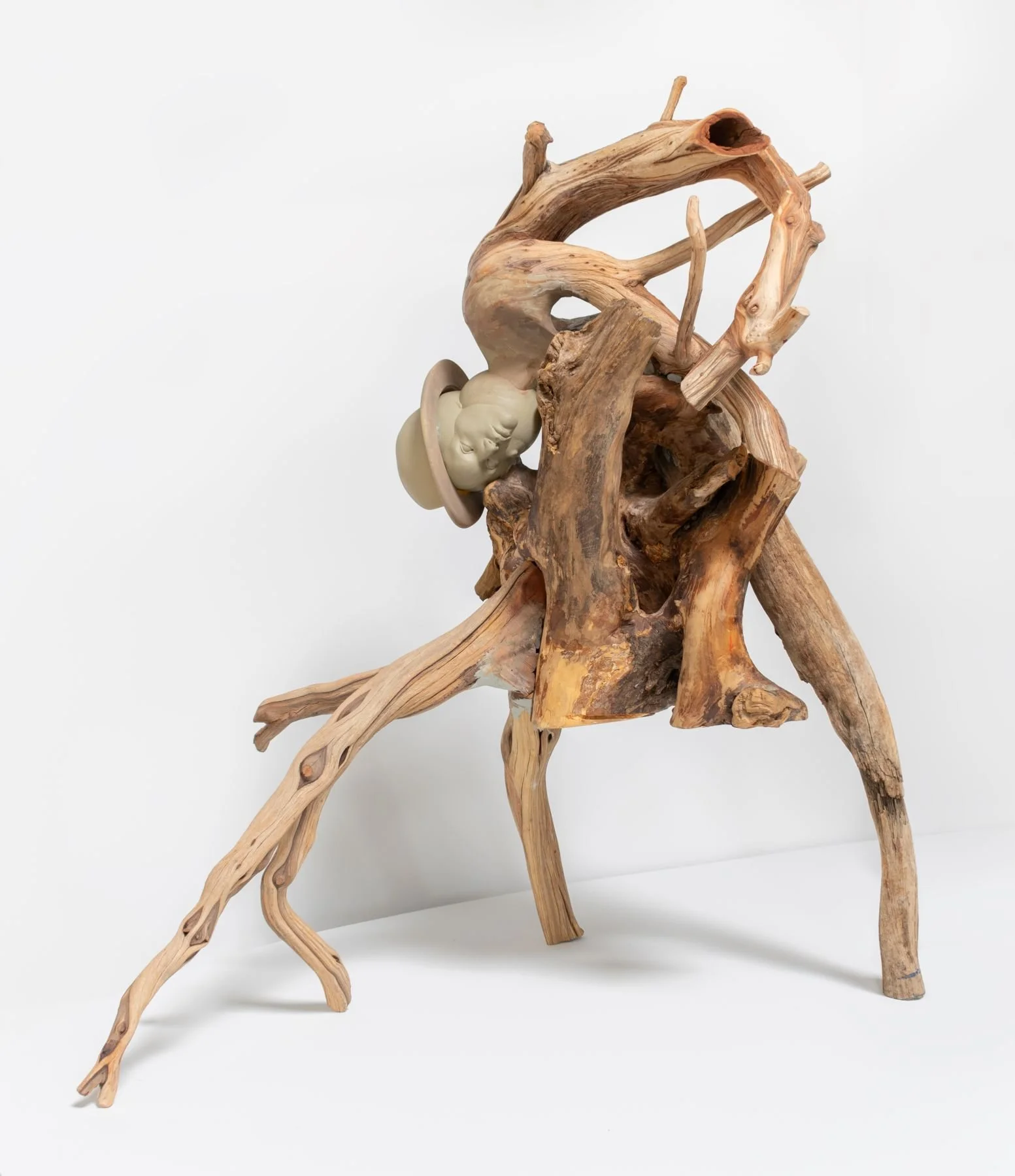
Marta Thoma Hall, Snake Woman (2024)
Resin, wood, epoxy, paint
In Snake Woman, the figure emerges directly from wood, with the material remaining visibly present as both body and ground. The sculpture resists separation between figure and environment, presenting identity as something materially embedded rather than imposed upon nature. The work emphasizes partial formation and continuity, positioning the self as inseparable from the substance from which it takes shape.
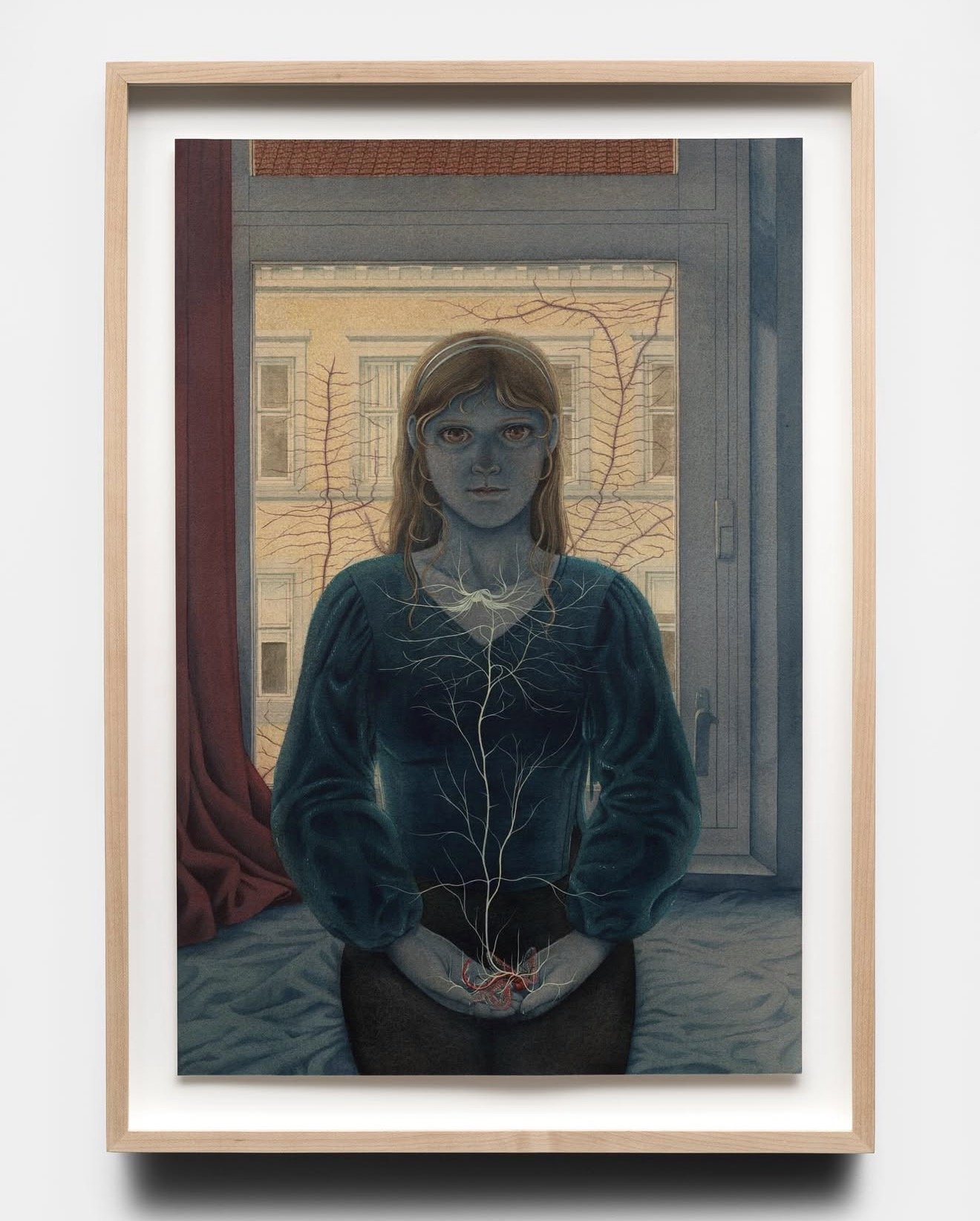
Oda Iselin Sønderland, Orkidé (2024)
Watercolor on paper
Orkidé presents the human body as internally structured by plantlike systems, where veins and tendrils echo root networks both within the figure and throughout the surrounding environment. The work reveals these organic structures as integral rather than symbolic, suggesting that the same connective logic operates inside the body and across the landscape.
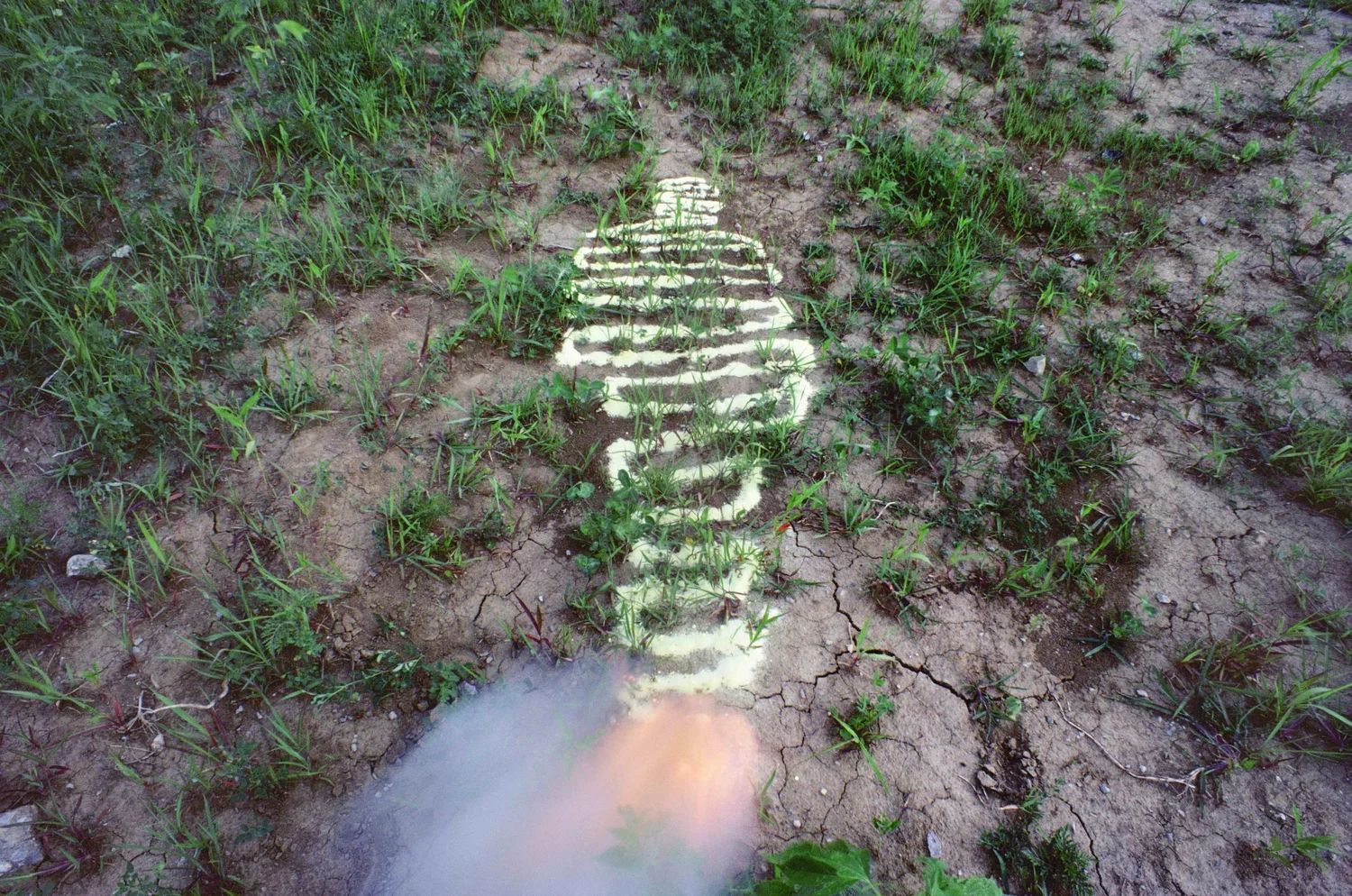
Ana Mendieta, Untitled: Silueta Series (1979)
C-print
Mendieta’s Silueta Series situates the body directly within the landscape, tracing its presence through earth, sand, and vegetation. The works register identity through imprint and absence, emphasizing connection over visibility. Here, hybridity is enacted through contact and erasure, positioning the self as inseparable from the ground it inhabits.
Section III: Soft Shields
This section focuses on how protection takes material form through structures that shelter without rigidity. Rather than depicting defense as opposition or resistance, the works here approach protection as something shaped through balance, weight, surface, and enclosure. Bodies and forms are held, buffered, or stabilized by porous structures that remain responsive to their surroundings, suggesting that care and defense can be built through material intelligence rather than force.
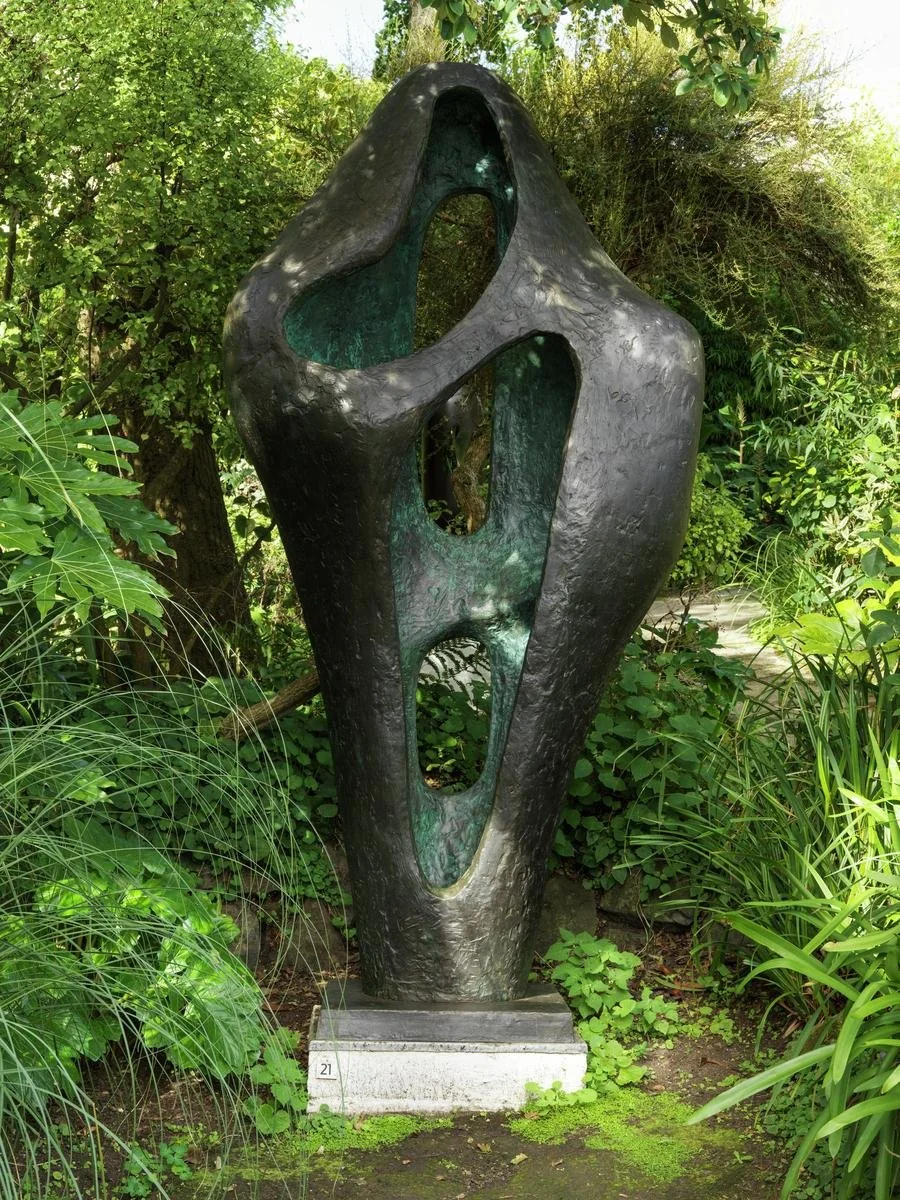
Dame Barbara Hepworth, Figure for Landscape (1959-60)
Bronze
Hepworth’s sculpture integrates body and environment through curved mass and internal voids that create both openness and containment. Protection is suggested through balance, proportion, and spatial tension rather than enclosure, allowing shelter to emerge from form itself. The work frames defense as something inherent to structure and relationship, not as an added surface or barrier.
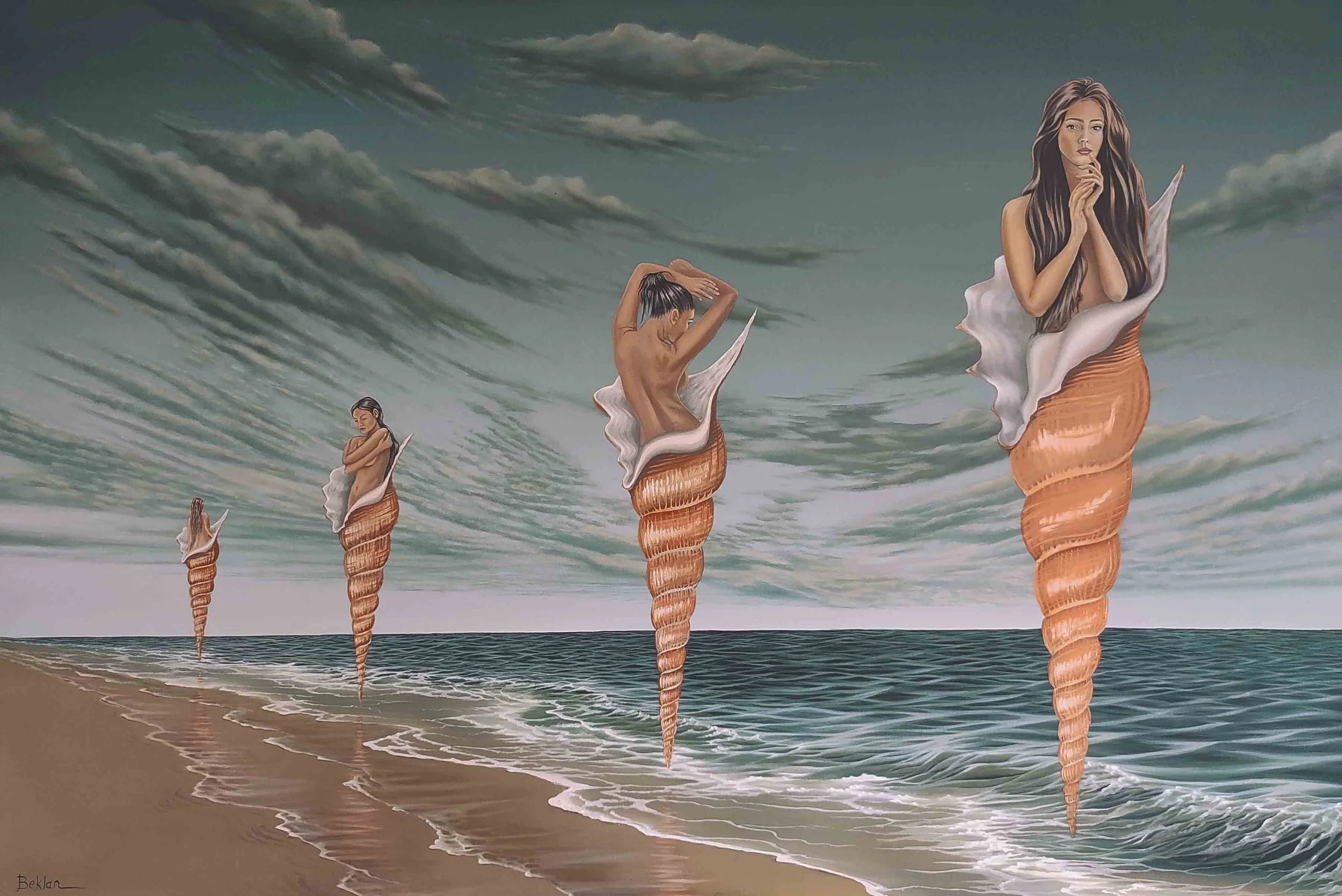
Beclan Kizilkay, Kabugunda Kadinlar (2022)
Oil on canvas
Kabugunda Kadinlar presents the shell as a protective structure. The work focuses on how form creates separation and shelter, using curvature and boundary to establish a contained interior amongst a vast environment. Protection is articulated through material presence and spatial definition, framing armor as an external structure that stabilizes and anchors, rather than transforms the body.
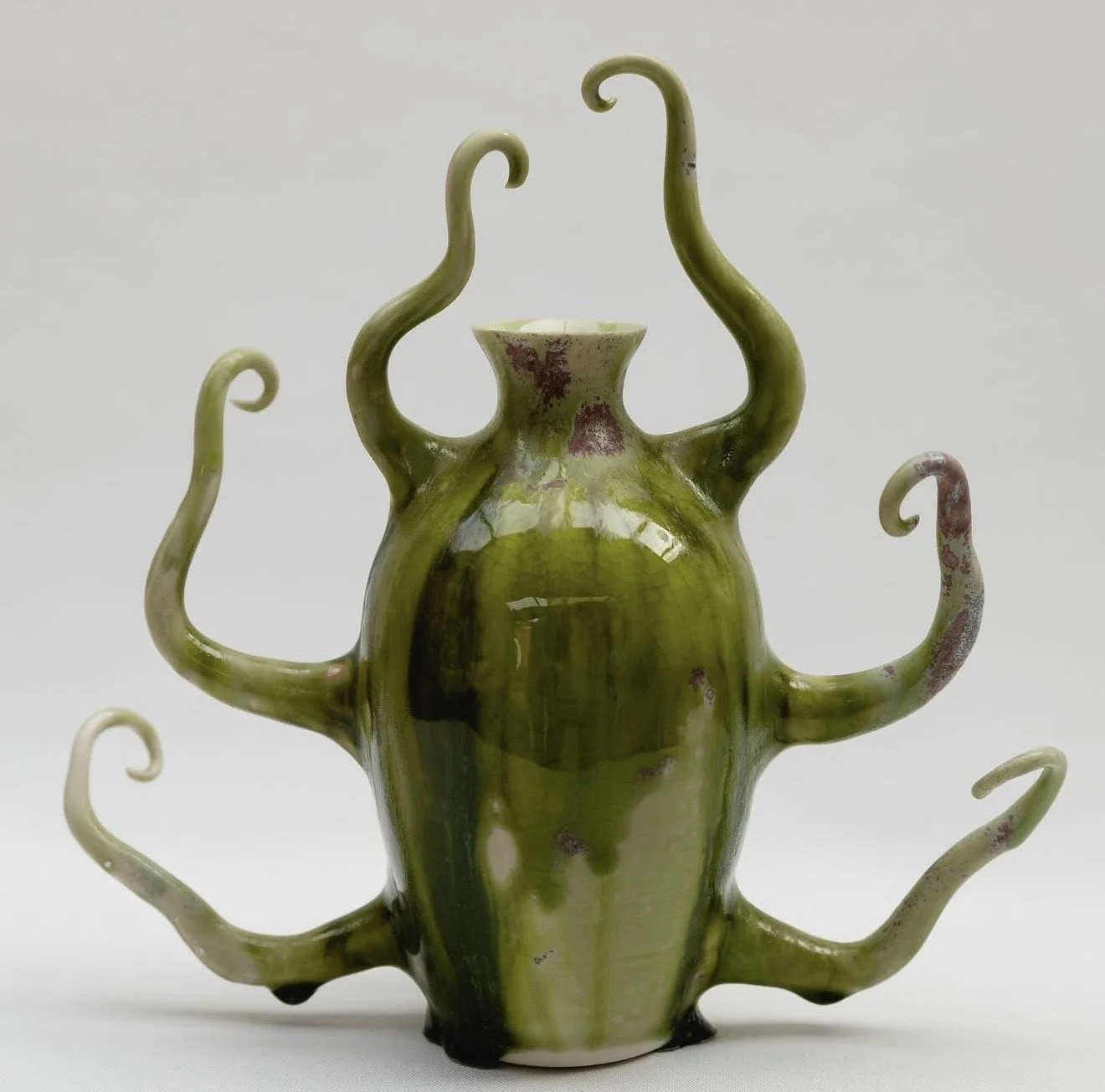
Lauren Cameron, Weary Warrior (2024)
Porcelain with Rutile and Chrome Glaze
In Weary Warrior, armor is rendered through ceramic form as something fragile, weight-bearing, and emotionally charged. The piece suggests protection that has been carried over time, marked by strain rather than strength. Material delicacy and physical presence work together to reframe defense as endurance and care rather than dominance.
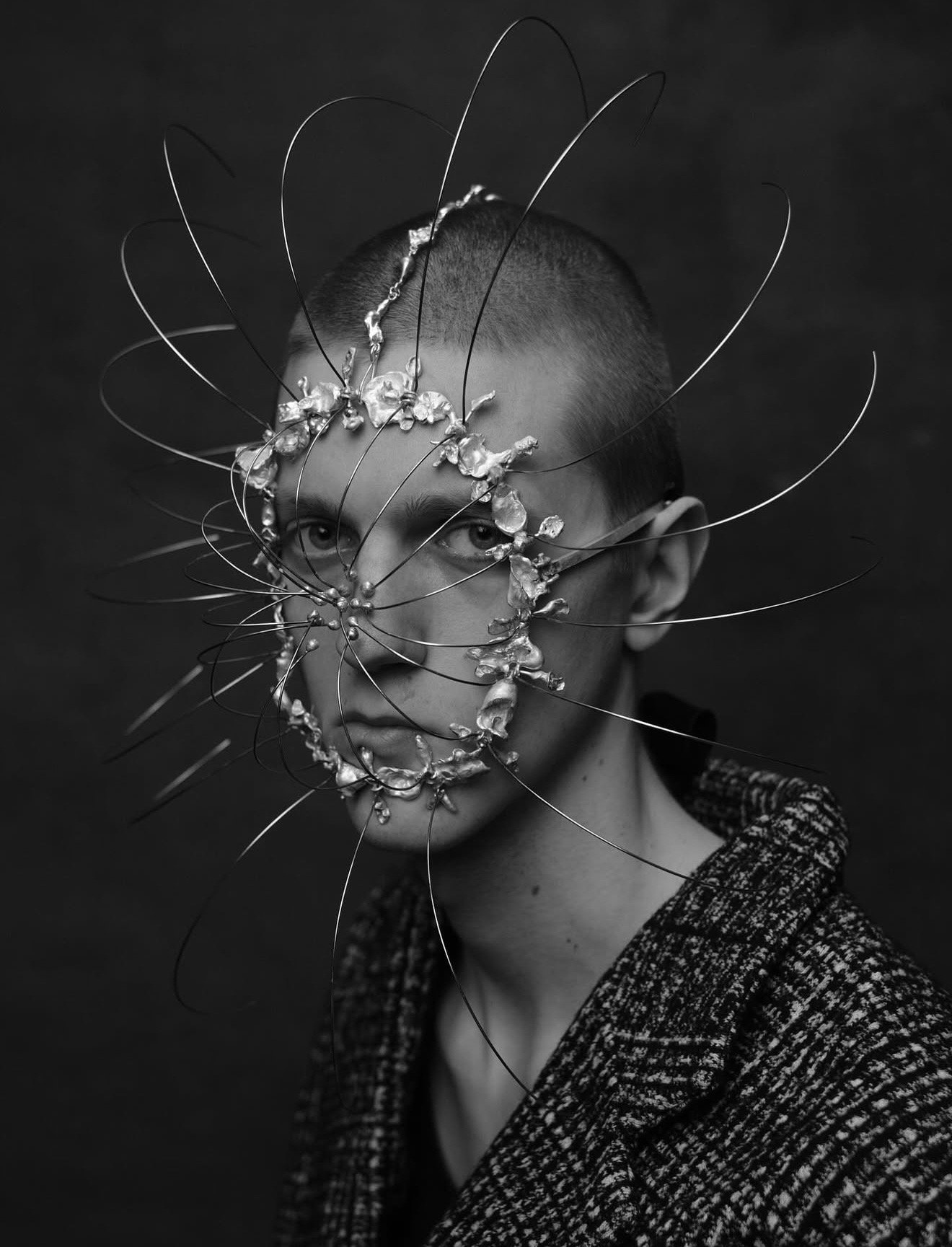
Claudia Lepik, Endless Light Ceremony (2025)
Lepik uses rigid metal to construct forms that function as both protection and adornment through a unique approach to jewelry design. Rounded edges, softened contours, and careful attention to surface transform hard material into a buffering presence that sits close to the body. Protection emerges through craftsmanship and invention, where metal becomes a delicate boundary between the body, mind, and external world.